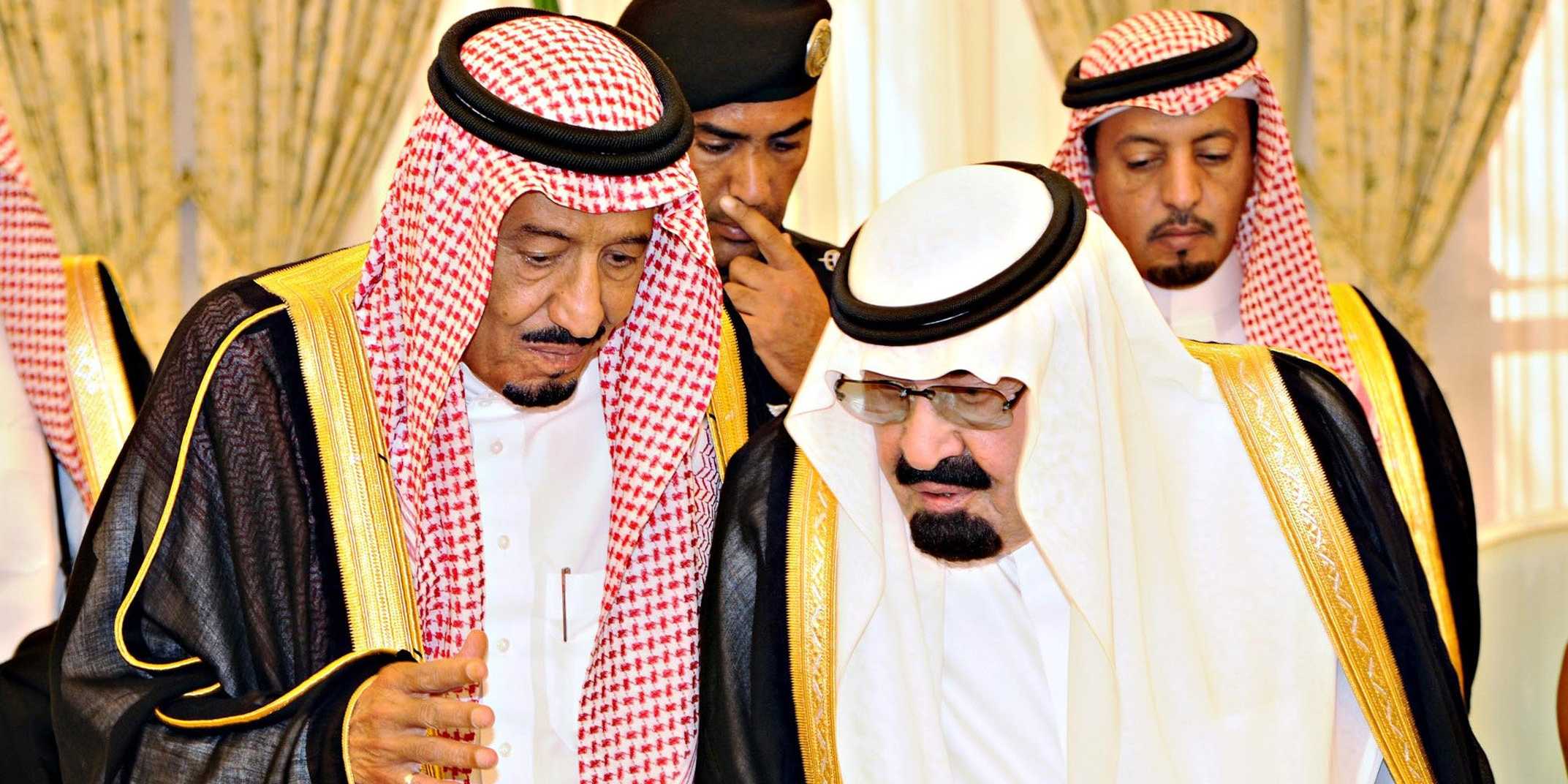
The new Saudi king’s decision to keep Ali al-Naimi in his job as oil minister signalled to energy markets that the world’s top crude exporter would not flinch from its policy of refusing to cut output as it fiercely guards market share.
Naimi convinced fellow OPEC members to pursue such a strategy, regardless of how far oil prices might fall. He was determined not to cede ground to producers outside the group such as Russia and U.S. shale drillers.
When reshuffling his cabinet on Thursday, King Salman – just days into his role as ruler – would have found it difficult to find more experienced hands to guide the kingdom’s oil sector through these turbulent times.
After all, 79-year-old Naimi has seen at least three price crashes during his two decades as oil minister.
“You can’t beat experience, and Ali al-Naimi has loads of it. He earned his wings in the 70s and 80s at Aramco and has now gone through three iterations of a crude price cycle: early 1980s, late 1990s, and the current one,” said Yasser Elguindi from economic consultants Medley Global Advisors.
That experience – and the respect it commands internationally – could be crucial to convince those OPEC states without pockets and reserves as deep as Saudi Arabia to hold the line in the current crisis.
“Is it reasonable for a highly efficient producer to reduce output, while the producer of poor efficiency continues to produce? That is crooked logic,” Naimi told the Middle East Economic Survey in December.
“If I reduce, what will happen to my market share? The price will go up and the Russians, the Brazilians, U.S. shale oil producers will take my share.”
But since November’s OPEC decision not to reduce output, some members have privately questioned whether this was the right approach.
Oil prices – down by more than half since June – have collapsed more than $20 a barrel since November’s meeting to depths unexpected even by core Gulf OPEC producers who had led the decision despite a call for a cut by others.
Outside OPEC, the oil minister of Oman, a Gulf Arab crude exporter, said the decision was creating volatility in the market without benefiting oil producers.
Energy investors have been closely watching for signs of continuity – or otherwise – of oil policy in Saudi Arabia, which has reacted in different ways to price collapses in the past.
The kingdom slashed its own output from over 10 million barrels per day (bpd) in 1980 to less than 2.5 million bpd in 1985, in a failed attempt to arrest a price slide which eventually removed Oil Minister Ahmed Zaki Yamani from office.
Naimi has already survived more than one price crash by acting decisively.
In the late 1990s OPEC, under his de facto leadership, agreed to a supply increase as Asia went into economic collapse. He is then credited with orchestrating a rescue from the subsequent price crash by also bringing non-OPEC producers to the table for production cuts and then for recruiting their support again in late 2001.
In 2008, when oil prices crashed to the low $30s, Naimi led the way as OPEC implemented its biggest-ever supply cut.
Faced with the latest crisis, while the tactics are different, few analysts expect Naimi to deviate from the policy he and his country have committed to.
The main tenets of Saudi oil policy, including maintaining the ability to stabilise markets via an expensive spare capacity cushion and a reluctance to interfere in the market for political reasons, are set by the top members of the ruling Al Saud family.
But Naimi has been granted wide scope to interpret and implement policy in the way he thinks best.
Having joined state oil firm Saudi Aramco at the age of 12 as an office boy, he eventually became CEO. He was named oil minister in 1995 and is now one of the country’s highest ranking non-royals, a technocrat who commands respect for his market knowledge and for avoiding politics, driving OPEC policy along business lines.
Some people familiar with Naimi have said that he has considered retiring for years. But that is unlikely to happen until there are at least some signs of market recovery, said Olivier Jakob from Petromatrix consultancy.
“If Naimi goes I would think that he prefers to go after there is some order put back into OPEC.”